
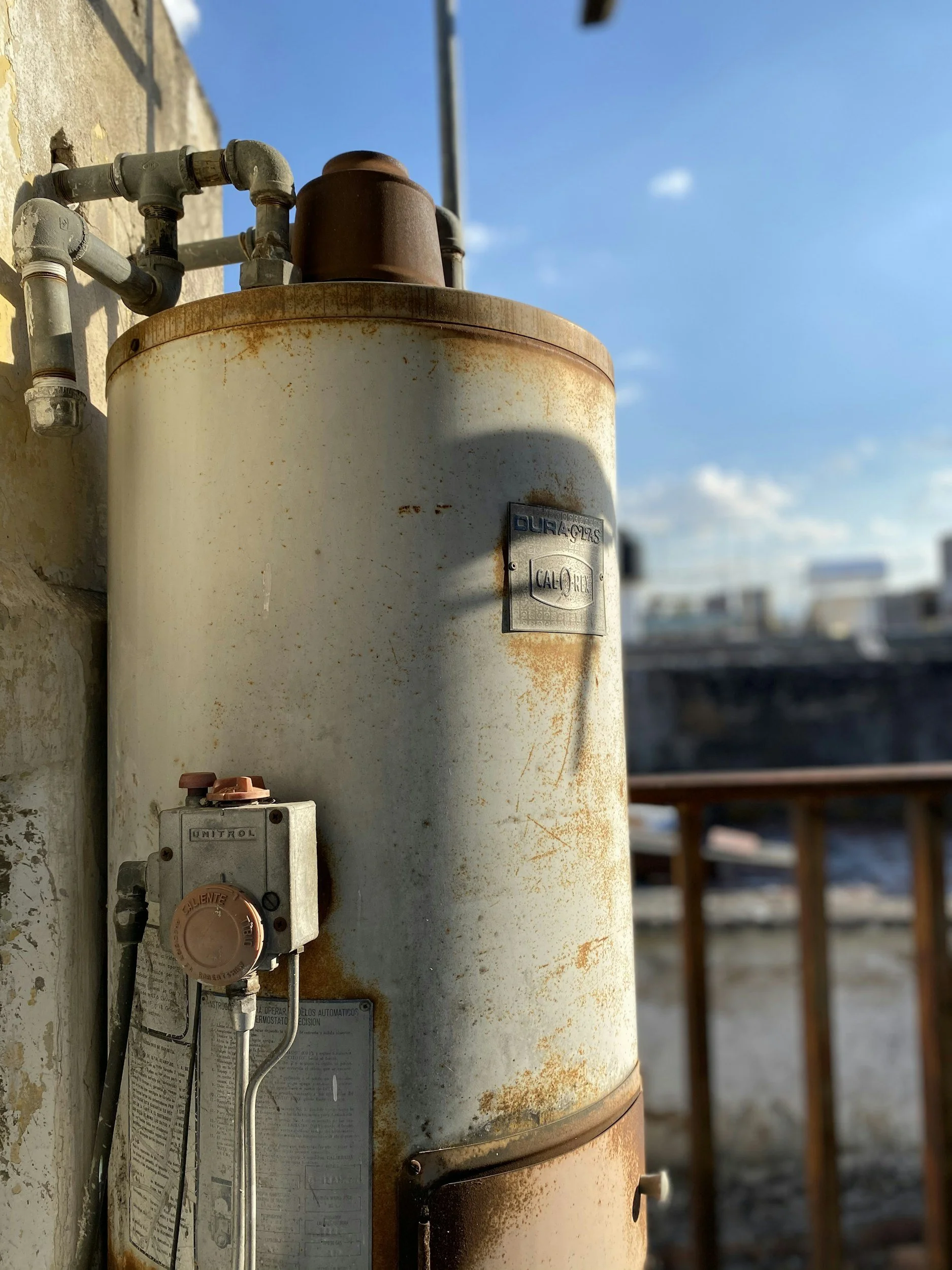
For most North Texas families, a tank water heater is the cheaper, simpler choice up front, and a tankless water heater costs more to install but lasts longer, uses less energy, and never runs out of hot water. Which one wins depends on how long you'll stay in the house, how many people shower in the morning, whether you have gas, and how you feel about doing yearly maintenance in a hard-water area like ours.
Here is how the two compare on the things that actually matter here. If you're replacing a unit that just failed, our water heater services page covers the repair and replacement side.
How each one works
A tank water heater keeps 40 to 75 gallons hot all the time. When you use hot water, cold water refills the tank and the burner or elements heat it back up. Once the hot water is used up, you wait for the tank to recover.
A tankless water heater has no storage. When you turn on a hot tap, water runs through a heat exchanger and a burner or element heats it on the spot. You get hot water for as long as the tap is open, up to the unit's flow limit.
Upfront cost
Tank wins, by a lot. A tankless unit costs more, and installing one often costs more than the unit. Switching from a tank usually means a larger gas line, new venting, a dedicated electrical outlet, and moving the mounting location. Electric tankless units for a whole house can need a major electrical service upgrade.
Replacing a tank with a tank is the simplest and cheapest swap. We'll give you a written price for both options on your actual house so you can compare.
Operating cost and lifespan
Tankless comes back here. A tank heats the same water over and over to keep it hot, even overnight and while you're on vacation. A tankless unit only heats water when you use it, so gas-fired tankless units typically use noticeably less energy.
Lifespan matters too. A tank water heater in North Texas often lasts around 8 to 12 years, and our hard water pushes it toward the short end. A well-maintained tankless unit can last 20 years. Over that span you might buy two tanks for every one tankless.
So the math tends to work out like this: if you'll be in the house 10 years or more, tankless often pays for itself. If you might move in three to five, a tank usually makes more sense.
Hard water, the North Texas catch
DFW water is hard. The minerals that build up as sediment in a tank also build up as scale inside a tankless heat exchanger, and scale cuts efficiency and can trigger error codes.
The fix is maintenance. A tankless unit should be descaled about once a year here, and a water softener or scale filter helps a lot. Skip it and a tankless unit can fail well before it should. A tank needs care too: see our guide on how often to flush your water heater.
Winter performance
Tankless units are rated by how many degrees they can raise the water at a given flow. In winter the water coming into your house is colder, so the unit has to work harder, and the hot water flow drops. A unit sized for July can come up short on a January morning with two showers and the dishwasher running.
That's a sizing problem, not a dealbreaker. Size for winter inlet temperatures and your peak use, not an average day.
Power outages
Texans who lived through the February 2021 freeze will want to read this part. A gas tankless water heater needs electricity to run its fan and controls, so no power means no hot water. Many standard gas tank heaters with a standing pilot keep working without power. If outages worry you, that's a point for a gas tank, or for a backup power plan.
Space
Tankless wins. It mounts on a wall about the size of a carry-on suitcase and frees up the closet or garage corner where the tank sat.
Which one we'd point you toward
A tank usually fits best when:
You want the lowest upfront cost.
You may sell in the next few years.
Your household is small or your hot water use is modest.
You don't want to deal with yearly descaling.
Tankless usually fits best when:
You plan to stay 10 years or longer.
Your family runs out of hot water with your current tank.
You have natural gas and room to update the gas line and venting.
You want the space back.
There's no single right answer, and we won't push you toward the more expensive unit if it doesn't fit how you live. Tell us how many people are in the house, how many bathrooms you have, and whether you have gas, and we'll give you a straight recommendation with prices for both. You can request a water heater estimate online.
Ready to replace yours?
If your current tank is leaking, rusting or not keeping up, now is the time to decide, not after it floods the garage. Our plumbing crew handles both tank and tankless installs across Frisco, Plano, McKinney, Allen, Prosper and Dallas.
Schedule a water heater visit or call (469) 285-4457. Out of hot water right now? Start with what to check first.
Frequently asked questions
Is a tankless water heater worth it in Texas?
It can be, especially if you'll stay in the home 10 years or more, have natural gas, and keep up with yearly descaling for hard water. If you might move soon, the higher install cost is harder to earn back.
What are the disadvantages of a tankless water heater?
Higher upfront cost, a more involved install, reduced flow in cold weather if the unit is undersized, yearly descaling in hard-water areas, and no hot water during a power outage for most gas models.
How long does a tank water heater last in North Texas?
Usually about 8 to 12 years. Hard water and skipped flushing push it toward the shorter end.
Does a tankless water heater run out of hot water?
No, it heats water as it flows. But it can only heat so much water at once. If too many fixtures run at the same time, especially in winter, the temperature can drop.
Can I switch from a tank to tankless?
Yes. It often needs a larger gas line, new venting and an electrical outlet near the unit. We'll check what your house needs before quoting.