
If a hail storm damaged your roof, the claim process comes down to one thing: proof tied to the storm, filed inside your policy window. Get a professional roofing inspection, document the damage with dates, and file promptly, and most legitimate hail claims in Texas go through. Skip the documentation or wait too long, and even real damage gets denied.
We have stood on a lot of roofs next to a lot of adjusters in North Texas. The homeowners who get fair settlements all do the same handful of things. Here is the process, in plain terms.
Step 1: Get the damage inspected before you file
File a claim only after you know what you actually have. A free inspection from a local roofer tells you two things you need: whether the damage is real hail damage, and whether the repair cost clears your deductible. If the damage is minor and sits below your deductible, filing only puts a claim on your record for nothing.
Our guide on what to do first after hail covers the ground-level steps, and what a roof inspection covers explains exactly what a roofer checks. Bring that inspection report into the claim with you.
Step 2: Know your policy and your deadline
Pull out your homeowner policy, or call your agent, and confirm two things:
Your deadline to file. Texas hail claims usually have to be filed within a set period after the storm, often about a year. Do not assume you have unlimited time.
Your deductible and whether it is a flat dollar amount or a percentage. Many Texas policies use a percentage-of-dwelling deductible for wind and hail, which can be larger than people expect. Knowing this number tells you whether a claim makes sense.
Step 3: Document everything with dates
This is what makes or breaks the claim. Gather:
Dated photos of all the damage you could safely capture from the ground (gutters, AC unit, fence, the hail itself).
The roofer's inspection report and photos of the shingle and flashing damage.
The date and rough time of the storm. Local weather records help confirm it.
Any interior damage, like ceiling water spots, photographed and dated.
The goal is a clear line from "this storm, this day" to "this damage." Vague or undated evidence is the easiest thing for an insurer to push back on.
Step 4: File the claim and schedule the adjuster
Call your insurer or file online, give them the storm date, and describe the damage. They will assign an adjuster to come inspect the roof in person.
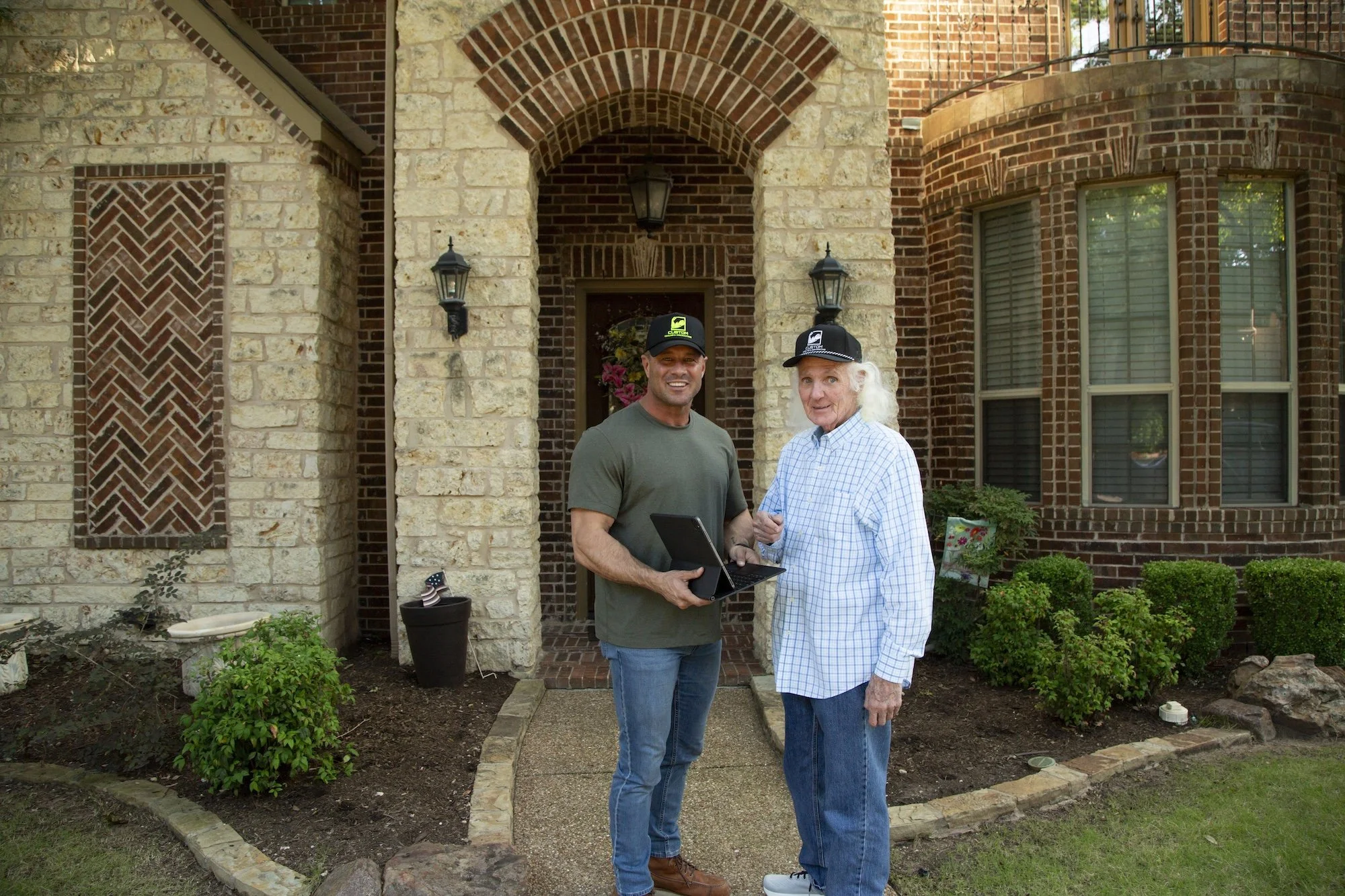
Here is a tip that pays off: ask your roofer to be there when the adjuster comes. The adjuster moves fast and may miss damage, especially on a large or steep roof. A roofer who knows what hail damage looks like can point things out on the spot so nothing legitimate gets left off the estimate. We do this for our customers regularly, and it often changes the outcome.
Step 5: Review the settlement, then schedule the work
Once the claim is approved, the insurer sends a settlement based on the adjuster's estimate. Read it against your roofer's estimate. If something was missed, your roofer can file a supplement with documentation to get it added. Then the repair or replacement gets scheduled.
A quick note on how payment usually works: many policies pay in two parts. You get the first check up front, and the rest, the "recoverable depreciation," after the work is finished and invoiced. So you will not always see the full amount before the job is done, and that is normal.
The mistakes that get Texas hail claims denied

Waiting too long. Past the filing window, even obvious damage is hard to claim.
No storm-dated documentation. Damage without a clear tie to a specific event invites a denial.
Letting a storm-chaser handle it. Some out-of-town crews inflate claims or do shoddy work, which can sink the claim and leave you holding the bag. Work with a local, licensed company that is here for the long haul.
Filing for damage below the deductible. A claim that pays nothing still goes on your record.
We are family-owned and based in Frisco, licensed and insured in Texas, and we will give you a straight read on whether a claim is worth filing before you ever pick up the phone.
Get the inspection that starts the process
The whole thing starts with knowing what you have. Contact us for a free roof inspection, or call (469) 285-4457. We will document the damage, give you an honest estimate, and stand with you through the adjuster visit.
Frequently asked questions
How long do I have to file a roof hail claim in Texas? It depends on your policy, but many require filing within about a year of the storm. Check your policy or ask your agent, and file as early as you can.
Will filing a hail claim raise my rates? Hail is generally considered an act of nature rather than your fault, so a single weather claim affects rates differently than an at-fault claim. Policies vary, so ask your agent how yours treats it.
Should my roofer meet the insurance adjuster? Yes, when possible. A roofer can point out damage the adjuster might miss, which helps make sure the estimate reflects the full scope of the work.
What is recoverable depreciation? It is the portion of the settlement the insurer holds back until the work is completed and invoiced. You receive it after the job is done, so the total often comes in two payments.
What if my claim gets denied but I know there is damage? You can request a re-inspection or have your roofer file a supplement with additional documentation. Solid, storm-dated evidence is what gets a denial reversed.